
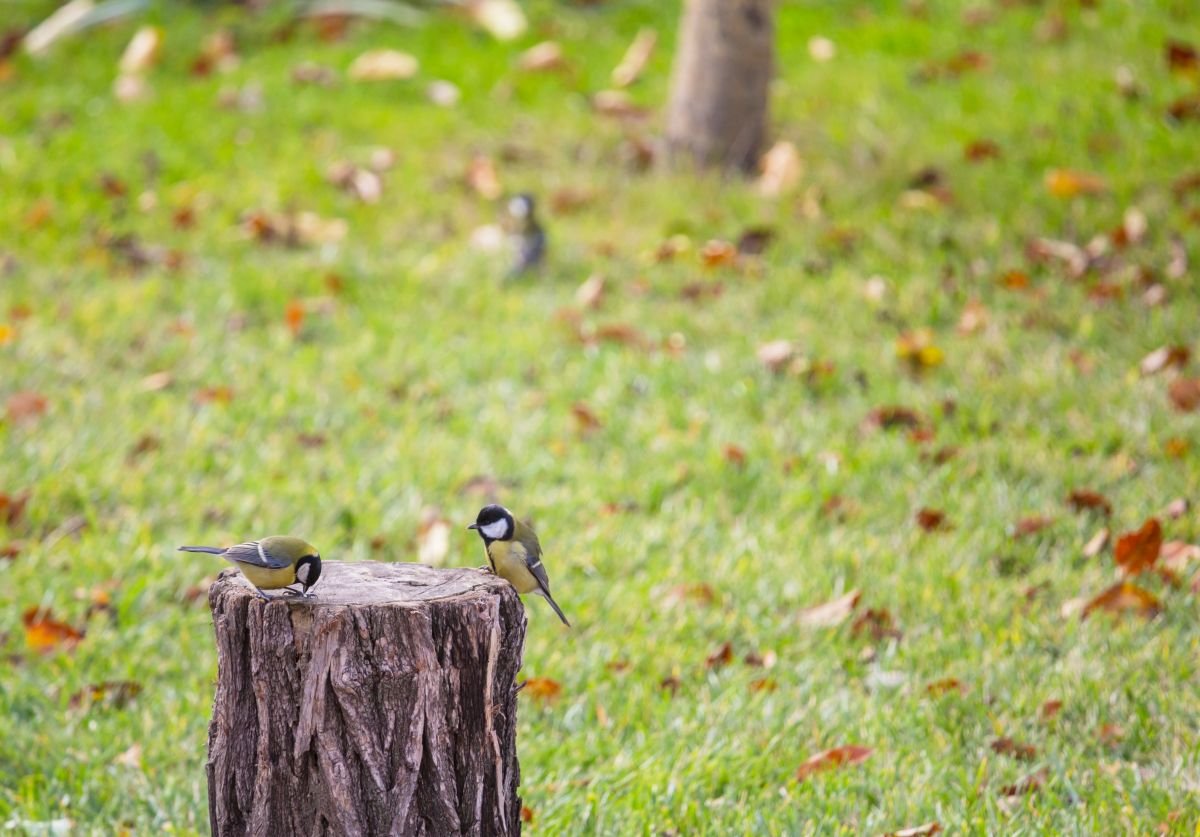

Most tree stumps are considered temporary items. They sit in the yard waiting to be removed, slowly disintegrating while disturbing the space around them. This approach does the opposite. Instead of removing the stump, he uses the existing structure and turns it into a functional object.

Change comes with a single move. Behind the creator in this video “how do you do DIY” cuts through the middle while leaving the outer ring untouched. That one decision keeps the bark intact and turns what was a solid block into something that begins to function as a built-in container.
The idea is straightforward: the stump becomes the planter.
The structure is already there
Unlike most garden projects, nothing is assembled here. The stump already has the necessary mass, stability and presence. The outer shell remains untouched, leaving the character of the wood visible, marking the border near the edge.
Once the center begins to open, the part turns from a flat surface into something that has volume. The thickness of the stump creates natural walls, and the shape begins to resemble a built-in planter without adding any material.

Hollowing out the center defines the form
As the material is removed from the center, the form becomes clearer. Depth controls how much soil the stump can hold, while preventing an uneven interior from feeling overgrown.
The process does not aim for precision. A slight variation in the surface adds texture and allows the wood to age naturally. Over time, the interior continues to break down, supporting plant growth rather than working against it.

The end result feels integrated, not added
Once filled with soil and planted, the stump no longer reads as leftover. It becomes part of the landscape. Flowers soften the edges, greenery fills the center, and the whole thing blends into the yard rather than standing apart from it.
No visible structure has been added around it. Everything comes from what was before.

This project works because it doesn’t try to replace the stump. It reuses it as the final object.
Instead of removing material and bringing in something new, the design stays in its existing form. With a controlled hollow and minimal intervention, the stump is transformed from an obstacle to a planting feature that seems intentional from the start.



