
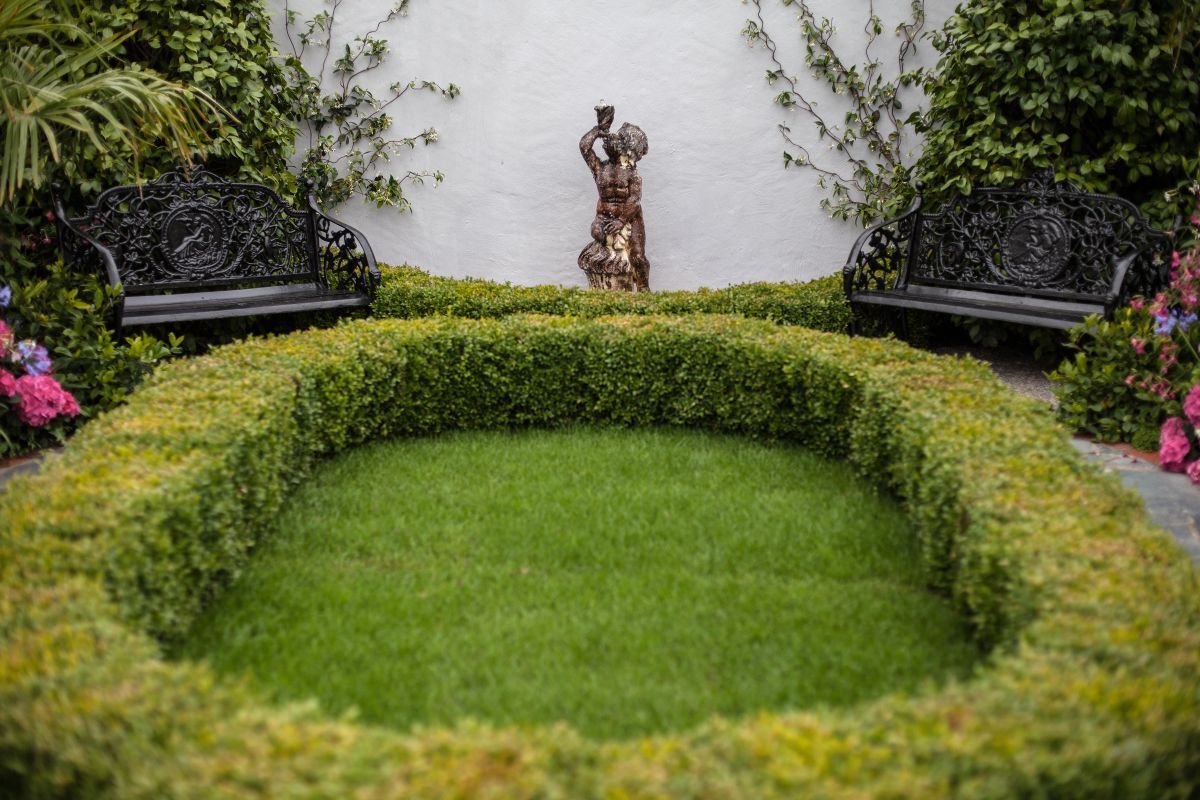

Want a hedge that stays full, clean and structured without constant trimming, disease problems, or that dull, overused boxwood look? These options solve the problems that boxwood creates continuously rather than mimicking its shape.

The replacement of boxwood is usually the same list repeated everywhere. arborvitae, holly, yew. In real landscapes, it comes with similar limitations. These lesser-used options work better in heat, poor soil, or low-maintenance setups.
They don’t try to imitate boxwood, they replace it with something more practical.
Pittosporum (Pittosporum tobira)

Pittosporum gives you the same dense structure as boxwood but with a softer, more natural look. The leaves are thick, glossy and hold color without burning in heat and sun.
It works well for hedges or clipped shapes, but also looks good when left loose. In hot climates, it consistently replaces boxwood without side effects and disease problems.
- Growing conditions: Full sun to partial shade, well-drained soil
- Size: 6-12 feet tall, 6-10 feet wide
- Zones: 8-11
- Best Uses: Hedges, privacy screens, foundation plantings
Hebe (Hebe spp.)

Hebe is almost never prescribed, but it works well for low hedges and structured plantings. It forms tight mounds with small leaves and stays compact without aggressive pruning.
It also adds subtle seasonal interest with small flowers. For modern landscapes, it feels lighter than boxwood and avoids heavy, overused applications.
- Growing conditions: Full sun, well-drained soil
- Size: 1–4 feet tall, 1–4 feet wide
- Zones: 7-10
- Best Uses: Low hedges, borders, container plantings
Teucrium (Germaner)

Teucrium offers structure without the stiffness of boxwood. It creates a low hedge that holds shape well and responds to trimming, but the texture feels more relaxed.
It handles drought, poor soil and full sun without problem. This makes it useful for front yards or borders where boxwood often struggles.
- Growing conditions: Full sun, dry to average soil
- Size: 1-3 feet tall, 2-4 feet wide
- Zones: 5-9
- Best Use: Edging, low hedges, Mediterranean gardens
Lonicera nitida (Box Honeysuckle)

This is one of the closest visual substitutes, but it is rarely used. It has small leaves, dense growth, and can be clipped into neat shapes like boxwood.
It grows quickly, which means it fills up space quickly. It also means it needs trimming more often, but it gives you a full hedge much sooner.
- Growing Conditions: Full sun to partial shade, adaptable soil
- Size: 3-6 feet tall, 4-8 feet wide
- Zones: 6-9
- Best Uses: Formal hedge, topiary, quick coverage
Euonymus japonicus (Japanese Euonymus)

Euonymus works where boxwood fails in difficult conditions. It tolerates wind, urban pollution and inconsistent care.
The texture is similar, but the leaf color can vary from deep green to variegated forms. It provides more visual contrast when acting as a hedge or shaped shrub.
- Growing conditions: Full sun to partial shade, average soil
- Size: 4-8 feet tall, 4-6 feet wide
- Zones: 7-10
- Best Uses: Hedges, screening, urban landscapes
Corokia (Corokia cotonaster)

Corokia isn’t an obvious choice, but it does structure in a different way. Thin, dark branches form a natural grid, and small leaves fill the gaps.
Instead of a solid mass like boxwood, it creates a light, sculptural effect. It works well in modern or minimalist gardens where heavy hedges look out of place.
- Growing conditions: Full sun, well-drained soil
- Size: 4-8 feet tall, 2-4 feet wide
- Zones: 8-10
- Best Uses: Sculptural hedges, modern landscapes
Santolina (Lavender Cotton)

Santolina replaces boxwood in dry, sunny areas where other shrubs fail. It creates a low, rounded shape that can be fringed or left natural.
The foliage is silvery or gray-green, which changes the entire look of the garden. It brings contrast and handles drought without constant care.
- Growing Conditions: Full sun, dry soil
- Size: 1-2 feet tall, 2-3 feet wide
- Zones: 6-9
- Best Use: Borders, drought-tolerant gardens, edging
What makes this better in practice
Most common boxwood alternatives try to mimic boxwood. This plant instead solves various problems. Some handle heat better, some need less water, others grow faster or need less shaping.
Making choices based on situations, not just looks, makes a difference. That’s why these options often work well, even if they aren’t the first recommendations.
Why no one recommends them
They are less familiar. Garden centers tend to push invasive plants because they are easy to sell and easy to maintain at scale.
Once used properly, these options reduce maintenance and avoid common problems associated with boxwood. That shift is more important than following a standard list.



