

Want an outdoor space that’s more like a designed living area than a patio filled with cluttered furniture? These seating ideas show how built-in benches are replacing chairs and sofas with layouts that feel more structured and deliberate.

In 2026, outdoor design is shifting away from loose furniture arrangements to seating that is directly integrated into the architecture of the space. Designers are using concrete bases, wooden edging, stone walls and planter extensions to create seating that defines the layout rather than sitting on top of it.
Think continuous benches that wrap around corners, seating carved into retaining walls, curved edges that guide movement, and platforms that double as places to sit. Whether the goal is a quiet garden corner or a social fire pit zone, these ideas show how built-in seating is turning patios into a more controlled and functional outdoor room.
An L-shaped built-in bench anchors the entire patio

Instead of filling the patio with individual chairs and sofas, this layout creates a seating area directly within the structure. An L-shaped bench defines the edge of the space and creates a continuous seating zone that feels intentional rather than an afterthought. It immediately organizes how the patio is used without relying on movable furniture.
What stands out is how everything works as a structure. A concrete base anchors the layout, a wooden backsplash adds warmth, and a central fire feature becomes a natural focal point. Instead of arranging furniture around the space, the design integrates the seating into the layout itself, making the patio feel more controlled and easy to use.
A built-in dining bench that replaces outdoor dining sets

This layout replaces the usual table-and-chair setup with seating that is integrated directly into the structure. A bench runs along the wall, creating a defined dining zone without cluttering the space with loose furniture. It keeps the footprint compact while still allowing multiple people to gather comfortably.
What stands out is how controlled and efficient the space feels. Benches, tables and stools are arranged in a single composition, keeping circulation clear and uncluttered. Instead of having to arrange furniture each time, the layout remains static and functional, making the patio easy to use on a daily basis.
A curved built-in bench that replaces the standard seating layout

This setup combines built-in benches with loose chairs, rather than the need for a fully matching outdoor furniture set. A curved bench defines the rear edge of the seating area, while the chairs remain flexible, allowing the layout to be adapted without losing structure. It creates a more natural gathering zone rather than a rigid arrangement.
What stands out is how balanced the mix feels. A built-in element anchors the space, while movable chairs keep it adaptable to a variety of uses. The curved shape softens the layout and follows the edge of the garden, making the seating area feel integrated into the landscape rather than placed on top of it.
An integrated wall bench that replaces a single seat

This layout eliminates the need for separate chairs by creating seating directly into the planter wall. The bench becomes part of the structure, turning what would normally be a boundary into a useful seating zone. It keeps the space open while still providing a clear place to sit.
The result is a more consistent and controlled layout. The concrete base, wooden seating and surrounding greenery are read as one continuous element rather than separate pieces. Instead of placing furniture on top of the patio, seating is integrated into it, making the space feel clean and easy to maintain.
A curved brick bench that replaces straight patio seating

This layout replaces standard straight seating with built-in benches that follow a curved line through the space. Instead of placing the furniture in a rigid position, the seating is shaped into the landscape, creating a more fluid and natural arrangement. It turns the edge of the patio into a continuous place to sit without adding separate pieces.
The result is a layout that feels more connected to its surroundings. The brick base, wooden seating surfaces and surrounding plantings all follow the same curve, guiding movement through the space. Instead of disrupting the garden with furniture, the seating becomes part of it, making the area feel more purposeful and easier to navigate.
A planter-integrated bench that replaces separate seating areas

Instead of placing a seat next to the planting bed, this approach creates a bench directly into the edge of the planter. The garden border becomes a useful seating zone, eliminating the need for extra chairs while keeping the layout clean and contained.
The space reads as one continuous element rather than separate parts. The timber base, brick seat details and dense planting blend into a single structure, allowing seating and greenery to work together rather than compete for space.
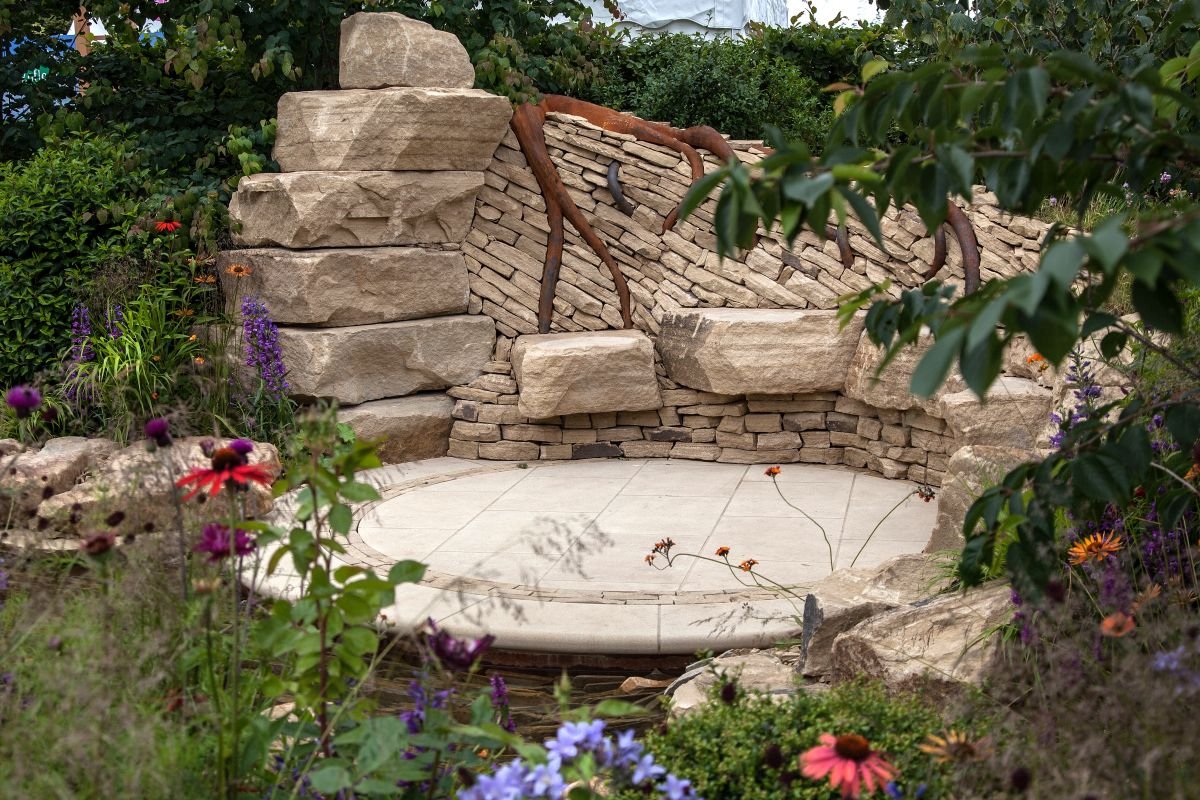
A stone built-in bench that replaces traditional outdoor seating

Instead of adding furniture to the garden, this setup creates seating directly from stone and built-in structures. Large blocks and stacked stone create a defined seating area that feels anchored in place, turning the landscape itself into a seating area.
The space feels more permanent and connected to its surroundings. Stone seating, retaining walls and planting work together as a single composition, eliminating the need for separate chairs while giving the area a strong sense of structure.
A corner garden bench that replaces separate seating

This setup creates seating at the edge of the garden, replacing the need for separate chairs or small outdoor sets. Using a retaining wall as a structure, benches wrap around corners, while surrounding plantings define the space rather than furniture placement.
The layout seems more closed and deliberate. The wooden seat, stacked stone base and dense greenery combine to create a tranquil seating zone that blends into the garden. Instead of placing furniture in the space, seating is part of it, making the area feel more cohesive and easy to use.
Tiered timber steps that double as seating

This layout replaces traditional seating with a series of wide wooden steps that follow the curve of the garden. Instead of adding benches or chairs, the level change becomes a seating area, keeping the space open while still providing multiple seating locations.
The design feels more fluid and adaptable. Steps, gravel paths and planting beds combine in a continuous layout, allowing people to sit anywhere along the edge without defining fixed seating zones.
The Sunken Fire Pit Seating that replaces standard patio furniture

This layout replaces scattered chairs and sofas with continuous built-in benches that define the edge of the patio. The seating wraps around the space, creating a clear boundary while leaving the center open for movement and gathering.
The space feels more organized and deliberate. The concrete base, integrated cushions and central fire feature work together as a composition, allowing seating to anchor the layout without the need for additional furniture.
A planter bench that replaces additional seating pieces

Instead of adding more chairs, the seating extends directly from the planter wall, turning the edge of the space into a continuous bench. It creates a clear place to sit without disturbing the layout with separate furniture pieces.
The space reads as a continuous structure. Benches, greens and surrounding surfaces are arranged in a single line, keeping the center open while maintaining a defined seating zone.
A built-in pergola bench that replaces loose patio seating

Instead of filling the deck with individual chairs and sofas, seating is built into a planter structure directly under the pergola. Benches form part of the layout, using the edges of the space to create a fixed and defined place to sit.
The composition remains simple and contained. Wooden benches, integrated planters and overhead structures are arranged in a continuous zone, which allows the space to function without additional furniture.



